

Indigenous Research

RENOVANT® X Indigenous Research
At RENOVANT®, regeneration is not a trend—it is a professional responsibility. It requires moving beyond mitigation toward measurable restoration: rebuilding ecological function, strengthening net positive impact, and designing residential environments that operate within the limits of land and water systems. this standard informs every project we accept and every partnership we undertake.
Indigenous Data Governance
Honoring Indigenous authority.
RENOVANT® is an Indigenous-led practice. The regenerative frameworks the firm brings to residential construction are grounded in the founder’s own ancestral knowledge and lifelong relationship with land stewardship. That foundation is deepened — not sourced — by ongoing engagement with Indigenous scholarship.
RENOVANT® works with Indigenous researchers whose work embodies relational intelligence, cultural depth, and decolonial integrity. Dr. Angélica Medina García is the firm’s current research collaborator, and the first of what will be a growing network of Indigenous scholars informing this practice.
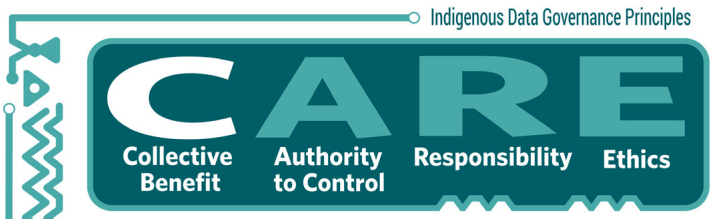
In all research engagements, RENOVANT® is guided by the CARE Principles for Indigenous Data Governance — ensuring that Collective Benefit, Authority to Control, Responsibility, and Ethics shape how knowledge is engaged, referenced, and applied:
Collective Benefit — knowledge serves the communities it comes from, not only the firm that references it
Authority to Control — Indigenous researchers and communities retain authority over their knowledge
Responsibility — the firm is accountable for how it engages with and applies that knowledge
Ethics — engagement is guided by relational accountability, not extraction
RENOVANT® does not extract Indigenous knowledge. It builds ethical architecture around it.
The goal is not representation. The goal is responsibility.
Indigenous knowledge Meets Regenerative Residential Design
The introduction to Dr. Medina García’s thesis will be published on the RENOVANT® website as part of the firm’s Indigenous Research work.
This publication is not a summary or simplification. It is a carefully contextualized translation from Mexican Spanish into American English — one that honors Indigenous authority, relational knowledge, and the ethical responsibility that comes with bringing that work into a new language and professional context.
This is the beginning, not the conclusion, of an ongoing commitment to reshaping how residential construction engages with land, culture, and community intelligence.
A Conversation with PhD. Medina Garcia


At RENOVANT® we believe that true transformation begins with deep listening.
In this exclusive dialogue, we invite you to explore reflective questions answered by PhD. Medina, and indigenous researcher whose work on Tsotsil experiences challenges conventional paradigms and redefines knowledge, identity, and justice across borders.
Her responses offer not only rigorous analysis, but wisdom grounded in lived experience—directly informing our indigenous regenerative frameworks for residential construction, sustainability strategy, and culturally coherent project management. This exchange is part of our ongoing commitment and honoring indigenous voices as essential to the future of residential sustainability, community evolution, and regenerative infrastructure design.
How would you like to introduce yourself—beyond academic titles?
Dr. Medina: I’m a person walking through this human experience, hoping to leave something meaningful behind—whether it reaches one person or three. Even if it’s just a smile or a touch to the heart when they remember me.
If someone reads your thesis without having met you, what do you hope they understand about the spirit of your work—not just the topic?
Dr. Medina: That it opens a door. That it’s a seed opening itself and breaking the soil. That it leaves behind a bit of hope, a spark of that great fire that sustains us—and that it moves thoughts or emotions, whatever they may be. That something within them shifts after reading it.
What do you wish people outside your context understood about being an indigenous woman conducting research from within your own community?
Dr. Medina: Every Indigenous nation is unique, with its own worldview and systems of organization.
There are many ways of being Indigenous.
Our clothing, language, or use of technology do not define how “Indigenous” we are.
Please do not romanticize us—there are customs, laws, and practices that need to be questioned and transformed.
We don’t appreciate being treated with infantilization.
We are not souvenirs or trendy topics.
Reciprocity matters.
Always speak truthfully and clearly.
Be respectful and ethical in your work—put yourself in the shoes of those you collaborate with.
Respect people’s beliefs and community structures.
Do not endanger those who participate in your projects.
Be prudent.
Understand risk. Practice self-care and collective care
How do you protect your community's stories while making your work visible to the world?
Dr. Medina: Sometimes, telling those stories is the best way to protect them — also by taking care of the places and spaces where they are shared.
What questions guide your work?
Dr. Medina: Why have Indigenous communities remained in disadvantaged positions for over 500 years?
What sustains the persistent inequalities and racism against Indigenous peoples?
Why do government institutions fail to recognize the racist actions they themselves carry out?
What sustains invisible racism?
What led or motivated you to study sociocultural studies?
Dr. Medina: I’ve been curious since I was a child about how the mind and society work. Sociocultural Studies offered an integrated way to explore both, drawing from various disciplines and critically analyzing the realities we live in. It also opens the door to diverse methodologies and interventions that aim to contribute and respond to social challenges.
Which identities, geographies, or lineages feel most important when you define yourself?
Dr. Medina:
Identities: The one who walks grounded, barefoot, and deep. The one who whispers and soothes.
Geographies: Oaxaca, Chiapas, Baja California, the Global South, the world.
What does it mean to do research that listens, instead of extracts?
Dr. Medina: For me, when listening and documenting, there is still a certain kind of extraction of knowledge. This brings up a constant questioning within me — in some way, even a feeling of betrayal that I find important to acknowledge. I recognize it because, in the end, by listening, I still end up extracting. In the end, I’m the one who speaks, and I’m the one who is heard — I’m the one being read in academic or institutional spaces, because only the most agreeable among us, those who have been “westernized” or “institutionalized” in one way or another, or as some say, the “good savages,” are the ones who get taken into account.
Unfortunately, Indigenous people themselves are not listened to directly.
I like this question because I think it’s necessary to recognize that contradiction — that research and science done from a senti-pensar (feeling-thinking) perspective, from the knowledge of the peoples and in general, is complex and full of contradictions. Still, I hold on to my commitment to speak, to raise my voice, and to tell what is really happening, because I am present in these spaces with greater visibility.